

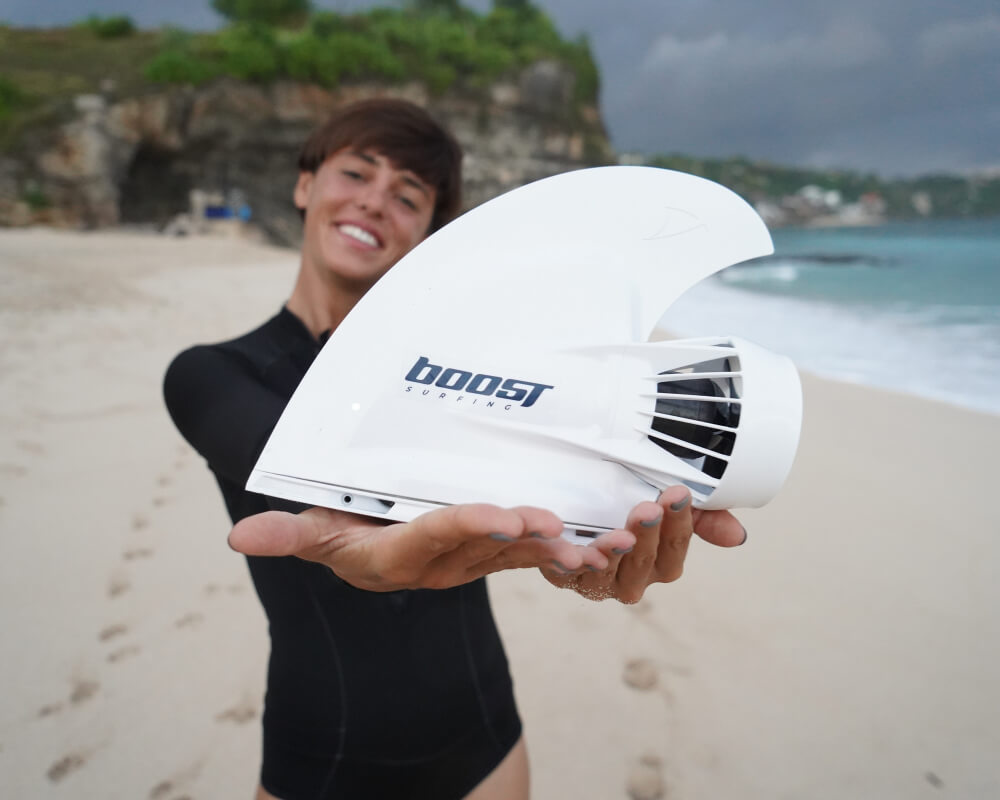
When people first discover electric fins, the reaction is almost always the same:
“$599? That’s expensive.”
And honestly — that reaction makes sense. Boost Fin isn’t a cheap gadget or an impulse buy. It’s an upgrade people think about carefully, especially busy dads, professionals, and weekend warriors who already juggle work, family, and limited free time.
But after months of real-world use, many riders come to a different conclusion:
“It’s not about the price. It’s about what I get back.”

The Real Cost Isn’t $599 — It’s Lost Time
For most weekend paddlers and surfers, the real problem isn’t motivation or fitness. It’s time scarcity.
Typical scenario:
• one or two sessions per week
• unpredictable conditions
• fatigue sets in early
• sessions end sooner than planned
Boost Fin doesn’t create more free time — but it turns limited time into higher-quality time.
That’s where ROI begins.
ROI Story #1: The Busy Dad Who Replaced the Gym
“Between work and kids, I only get out once or twice a week. I was paying for a gym I barely used.”
This rider noticed something unexpected after buying Boost Fin:
his paddling sessions started replacing workouts.
Before Boost Fin:
- short sessions
- tired shoulders
- low consistency
After Boost Fin:
- longer paddles
- better endurance
- no need for extra cardio
Quick math:
• saved ~$50/month by canceling a gym membership
• Boost Fin paid for itself in about a year
“Now my workouts happen on the water. That alone made it worth it.”

ROI Story #2: Saving 2 Hours of Effort Every Week
Many Boost Fin users don’t talk about speed — they talk about effort saved.
“I still paddle. I just don’t fight wind and current the whole time.”
On average, weekend riders report:
• 20–30 minutes less paddling strain per session
• fewer breaks
• less recovery time afterward
Over a month, that adds up to 6–8 hours of effort saved — energy that goes back into family time, work focus, or simply feeling better.
ROI Story #3: Fewer Canceled Sessions = Higher Value
One of the most overlooked costs in water sports is abandoned sessions.
“If it was windy, I just wouldn’t go.”
After Boost Fin:
- headwind no longer kills motivation
- paddling back feels manageable
- confidence to explore farther
“I paddle more often now. That alone changed the value equation.”
When sessions happen more consistently, the cost per session drops dramatically.

ROI Story #4: Family SUP Without Burnout
Parents consistently mention this use case.
“Paddling with kids used to drain me.”
Boost Fin helped by:
- compensating for extra weight
- keeping pace manageable
- extending family sessions
Instead of ending early, families stay out longer — and enjoyment goes up.
“For family days alone, it was worth it.”
ROI Story #5: One Device, Multiple Uses
Several reviews highlight a practical point:
“I use it on my SUP, my surfboard, and even my kayak.”
Instead of buying:
- multiple boards
- different propulsion accessories
- upgrades that solve only one problem
Boost Fin becomes a single solution across activities.
That versatility spreads cost across many sessions and scenarios.

ROI Story #6: Less Fatigue, Better Recovery
For riders in their 40s, 50s, and beyond, ROI often means how they feel the next day.
“I still get a workout — I’m just not wrecked.”
Benefits mentioned repeatedly:
- reduced shoulder strain
- faster recovery
- fewer skipped sessions
When you don’t lose the next day to soreness, the value extends beyond the water.
ROI Story #7: The “I Hesitated” Review
A very common pattern:
“I hesitated for months because of the price.”
Then:
“Now I wish I bought it earlier.”
Why?
Because ROI isn’t immediate — it compounds:
- more waves
- longer sessions
- fewer skipped days
- more enjoyment
Over a season, that adds up.

Quick Payback Math (Conservative)
Let’s keep it realistic:
- 1–2 sessions per week
- ~30 minutes less fatigue per session
- fewer canceled days
That’s roughly:
- ~2 hours/week of “effective paddling value”
- ~8 hours/month
Even valuing your free time modestly at $25/hour, that’s ~$200/month in recovered value.
What Boost Fin Is — and Isn’t
It’s important to be honest.
Boost Fin is not:
• a professional tow system
• a replacement for fitness
• a high-speed motor
It is:
• simple
• portable
• easy to use
• designed for real people with limited time
That realism is exactly why ROI works for busy riders.

Is Boost Fin Worth $599?
If you look at Boost Fin only as a piece of hardware, the price can feel high. But most people who end up satisfied with their purchase stopped evaluating it as a gadget — and started seeing it as a time and energy multiplier.
For busy dads and weekend warriors, the value isn’t measured in top speed or specs. It shows up in smaller, more practical wins: fewer canceled sessions, longer days on the water, and the ability to paddle without feeling drained halfway through. Over months of use, those gains quietly stack up.
Boost Fin doesn’t make paddleboarding effortless. It makes it sustainable — and for many riders, that’s what keeps the sport part of their life instead of something they slowly drift away from.
Share:
Boost Fin Long Range Review 2026: Is It Still the Best Electric Fin for SUP?
Lake Tahoe Spring Paddleboarding Guide 2026: Why Boost Fin Is Your Must-Have