

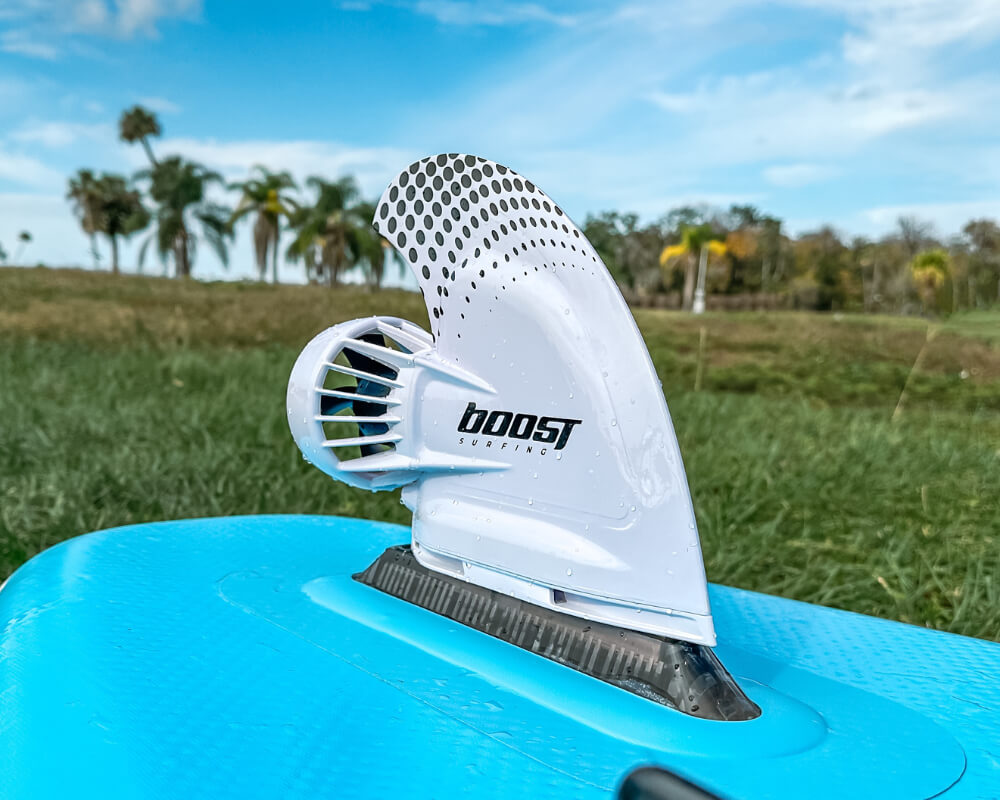
Electric fins are no longer a novelty in 2026. For many paddleboarders, they’ve become a practical way to extend sessions, handle difficult conditions, and make SUP more accessible for different lifestyles. Among all options on the market, Boost Fin Long Range continues to stand out — but an important question remains:
Is Boost Fin Long Range still worth it in 2026, or have newer alternatives caught up?
In this Boost Fin review 2026, we’ll look at real-world usage across different SUP styles, water conditions, and rider scenarios — from family paddling to challenging environments — and answer the question many buyers are asking: is Boost Fin worth it today?

What Is Boost Fin Long Range?
Boost Fin Long Range is an electric SUP fin designed to provide assistive propulsion, not full motorization. It replaces a standard fin and installs directly into common fin boxes using adapters — no external batteries, no deck-mounted cables, and no permanent modifications.
The Long Range version focuses on extended runtime and sustained assistance, making it especially popular with SUP riders who spend longer periods on the water or face wind and current regularly.
Core idea:
• Paddle normally
• Activate boost only when needed
• Save energy for enjoyment, not survival
Setup & Compatibility: Still One of Its Strongest Points
One reason Boost Fin continues to receive positive user reviews is its simplicity.
- installs like a regular fin
- works with most inflatable and hard SUPs
- uses slide-in and US box adapters
- pairs with a wireless wrist remote
For inflatable SUPs — which dominate the market in 2026 — this matters a lot. Riders can upgrade performance without sacrificing portability.
This ease of setup is repeatedly highlighted in boost fin user reviews, especially from people who don’t want technical gear.

Performance on Different Types of SUPs
Inflatable All-Around SUPs
On all-around inflatable paddle boards, Boost Fin Long Range delivers its most noticeable impact.
Common benefits:
- easier paddling into headwind
- better momentum over longer distances
- less fatigue during casual cruising
Many users describe their inflatable SUP as feeling “more efficient” rather than faster. That distinction matters — the fin smooths effort instead of turning the board into a speed machine.
Touring & Long-Distance SUPs
This is where the Long Range version really shines.
For touring boards and longer paddles:
- sustained assist helps maintain rhythm
- battery lasts full sessions without anxiety
- paddling becomes more predictable
If your SUP sessions often exceed two hours, or involve open water, Long Range earns its place.
SUP with Kids or Passengers
Family paddling is one of the most underrated use cases.
Parents report that Boost Fin Long Range helps when:
- towing a child sitting on the board
- paddling with extra weight
- adjusting pace to match kids’ energy
Instead of ending sessions early, families can stay out longer — without pushing too hard.

Handling Challenging Conditions
Wind
Wind is one of the main reasons SUP sessions get cut short. Boost Fin Long Range doesn’t eliminate wind, but it reduces how punishing it feels.
Users consistently mention:
• being able to paddle back against wind
• less shoulder strain
• more confidence to explore farther
Current & Tidal Water
In rivers, tidal zones, or coastal paddling:
• boost helps hold position
• assists during return legs
• reduces stress of misjudged distances
This is a major factor in why many riders say Boost Fin is worth it — not because it makes them faster, but because it makes situations safer and more manageable.
Flat Water & Lakes
On calm water, Long Range feels less dramatic — and that’s a good thing.
Most riders use boost selectively:
• to extend distance
• to conserve energy
• to maintain steady pace
The fin blends into the session rather than dominating it.

Battery Life: Real-World Perspective
In 2026, battery expectations are higher — but Boost Fin Long Range still holds up well.
Typical real-world usage:
• 120–180 minutes depending on conditions
• longer when boost is used intermittently
• enough for full touring sessions
Importantly, most boost fin user reviews point out that they don’t run the motor constantly. Used strategically, the battery easily covers real SUP days.
Weight & Board Feel
Yes, Long Range is heavier than the standard Boost Fin.
In practice:
- barely noticeable on inflatable SUPs
- more apparent on smaller boards
- offset by added stability on larger setups
For SUP use, weight is rarely a dealbreaker — especially compared to external motor systems.

Is Boost Fin Long Range Still Worth It in 2026?
This is the core question.
Based on real-world use and long-term reviews, Boost Fin Long Range remains worth it if you:
- paddle for long sessions
- face wind or current regularly
- paddle with kids or extra weight
- want confidence to go farther
It may be less compelling if:
- your sessions are always short
- you paddle only in calm conditions
- you prioritize ultra-light setups
That honesty is important — and reflected in balanced reviews.
What Users Still Praise (and What They Don’t)
What riders love:
• simple installation
• clean, cable-free design
• predictable assist
• extended runtime
• versatility across boards
Common criticisms:
• higher price point
• heavier than the standard model
• not designed for high-speed towing
None of these are surprises — and none invalidate its core purpose.

Best Electric Fin for SUP in 2026?
For long-distance SUP riders, families, and paddlers dealing with real-world conditions, Boost Fin Long Range is still one of the best electric fins available in 2026.
Not because it promises extremes — but because it delivers consistency, reliability, and ease of use.
That’s why many reviews conclude the same way:
It doesn’t change what SUP is — it just makes it easier to enjoy.
Share:
Why Inflatable Paddle Boards Dominate 2026 – And Boost Fin Makes Them Unstoppable
Is It Worth $599? ROI Stories from Busy Dads & Weekend Warriors