

If you’re new to paddleboarding or surfing, it’s normal to feel a mix of excitement and hesitation. The idea of balancing on a board, paddling out, dealing with wind or small waves — it can look effortless on Instagram, but feel very different in real life. That’s exactly why so many beginners quietly give up after a few sessions. Not because they don’t enjoy the water — but because it feels harder than expected.
This is where Boost Fin changes the experience. And despite what many first-time riders assume, it’s far easier — and more fun — than you think.
This guide breaks down what beginners really worry about, how Boost Fin works in practice, and why it’s become one of the most beginner-friendly SUP and surf upgrades in 2026.

The Beginner Reality: It’s Not About Skill, It’s About Energy
Most beginners don’t struggle with balance for long. What actually wears them down is:
- paddling into wind
- fighting light current
- repeated paddle-outs
- running out of energy too early
That fatigue hits fast — especially on inflatable paddle boards, which are stable but can feel slower in real conditions.
Boost Fin doesn’t remove the learning process. It simply reduces the parts that frustrate beginners the most, so progress feels natural instead of exhausting.
What Is Boost Fin (In Beginner Terms)?
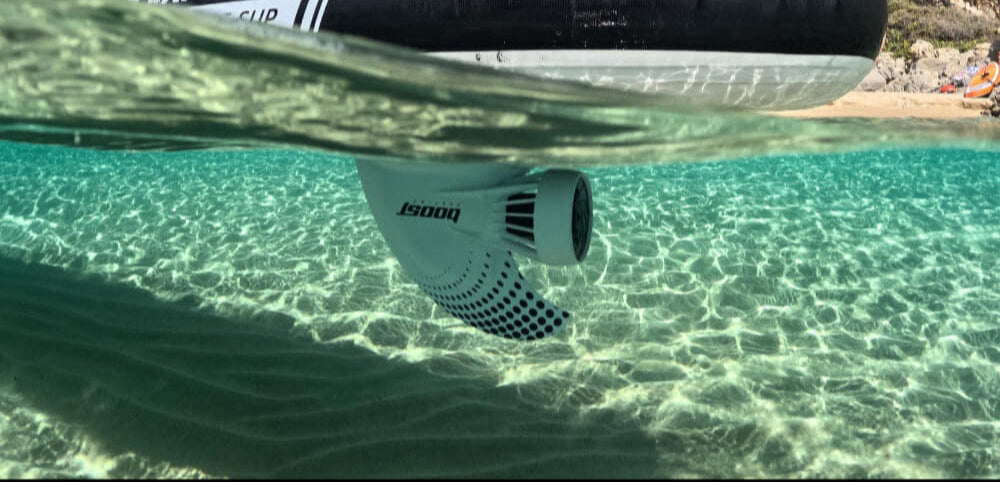
Boost Fin is an electric fin that replaces a standard fin on your paddle board or surfboard.
That’s it.
No external motors.
No cables on the deck.
No technical setup.
You paddle as usual — and when you need a little help, you press a button on a wireless wrist remote. The fin gives gentle, controlled assistance to help you move forward more easily.
Think of it like: Power steering for paddling — not an autopilot.
You’re still in control the entire time.

Why Boost Fin Feels Beginner-Friendly From Day One
1. Installation Is Surprisingly Simple
One of the biggest beginner fears is setup.
Boost Fin installs:
- like a regular fin
- in just a few minutes
- without tools
It works with most inflatable paddle boards and many hard boards using adapters. If you can install a fin, you can install Boost Fin.
Most beginners report being fully set up before their first session starts — no tech learning curve.
2. You Don’t Need to Use It All the Time
This is important.
Beginners often assume an electric fin means “constant motor use.” In reality, most riders use Boost Fin only when needed:
- paddling out
- repositioning
- heading back to shore
- dealing with wind
The rest of the time, they paddle normally.
This makes learning feel less pressured and more relaxed.
3. It Builds Confidence Without Taking Over
Boost Fin doesn’t make decisions for you. It simply gives you the option to assist yourself.
For beginners, that means:
- less fear of drifting too far
- more willingness to explore
- calmer reactions when conditions change
Confidence grows faster when you’re not constantly worried about whether you have enough energy to get back.

Why Beginners Actually Have More Fun with Boost Fin
Fewer “I’m Done Already” Moments
One of the most common beginner experiences is ending a session early — not because it’s boring, but because arms and shoulders are done.
Boost Fin helps distribute effort more evenly, so sessions feel longer and more enjoyable.
Learning Feels Rewarding, Not Punishing
When fatigue hits too early, beginners stop focusing on technique and start focusing on survival.
With less strain:
- balance improves faster
- paddling rhythm becomes smoother
- progress feels noticeable
That positive feedback loop is what keeps people coming back.
It Turns “Maybe” Days Into “Let’s Go” Days
Windy? Slight current? Long lake?
Instead of canceling, beginners feel more comfortable heading out — knowing they have backup if conditions aren’t perfect.
That flexibility leads to more time on the water, which is the fastest way to improve.
Is Boost Fin Safe for Beginners?
Short answer: yes, when used properly.
Boost Fin is designed with controlled thrust — not sudden acceleration. It doesn’t yank the board or surprise the rider.
Beginner-friendly safety factors:
- gradual power delivery
- wrist-mounted control (easy to release)
- used in short bursts, not continuously
As with any water activity, wearing a leash and following basic safety guidelines is essential — but Boost Fin doesn’t add risk when used responsibly.

SUP vs Surf: Where Beginners Benefit Most
On Inflatable Paddle Boards
This is where Boost Fin shines for beginners.
Inflatable SUPs are stable, forgiving, and perfect for learning — but they can feel sluggish in wind. Boost Fin offsets that without changing the board’s friendly nature.
On Surfboards
For beginner surfers, Boost Fin can:
- reduce paddle-out fatigue
- help with positioning
- make wave attempts less exhausting
It doesn’t catch waves for you — but it helps you stay fresh enough to try again.
“Will I Become Dependent on It?”
This is a common concern — and a fair one.
In practice, most beginners:
- use Boost Fin less over time
- paddle more confidently as fitness improves
- keep it for tougher days or longer sessions
Boost Fin doesn’t replace skill development — it supports it.
Many riders eventually alternate between assisted and unassisted sessions, depending on conditions.

Is Boost Fin Worth It for Beginners?
If you plan to paddle or surf more than a few times a year, the answer is often yes.
Not because it makes you “better” instantly — but because it makes the experience:
- less tiring
- less frustrating
- more consistent
- more fun
And for beginners, fun is what determines whether a new hobby sticks.
Easier Doesn’t Mean Cheating
There’s a myth that learning should be hard to be valid.
In reality, the best learning happens when:
- effort feels manageable
- progress feels achievable
- sessions end with energy left
Boost Fin doesn’t remove the challenge — it removes the unnecessary struggle.
That’s why so many beginners are surprised by the same thing:
“I thought it would feel complicated.
It actually made everything simpler.”
And simpler, on the water, usually means more fun.
Share:
Best USA Spring Paddleboard Spots 2026: Lakes & Coasts Made Easier with Boost Fin
Common Boost Fin Myths Busted: Honest Answers to Your Biggest Questions