

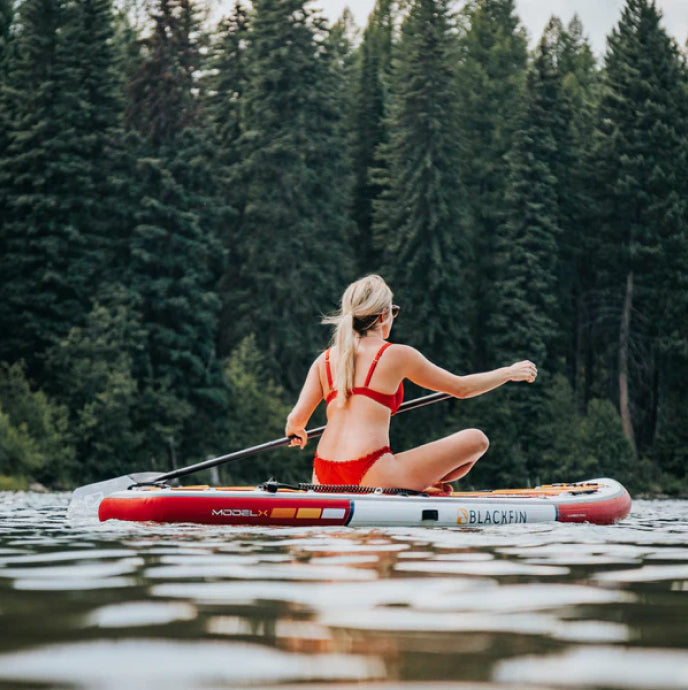
Choppy water is where stand-up paddleboarding stops being just a relaxing hobby and starts to feel like a real skill. Wind is pushing from one side, current is pulling from another, your board wants to turn, and every little wave tries to knock you off balance.
For many paddlers, this is the moment they either fall in love with SUP — or decide it’s “too hard”.
The good news: with the right techniques, even messy, wind-blown water becomes manageable and fun. And with a smart SUP upgrade like an electric SUP fin (for example, Boost Fin), you can get an extra layer of support when conditions get demanding.
This guide will walk you through:
- how to tell wind vs current and which one is really controlling your board
- how to adjust stance, stroke, and route on choppy days
- how a motorized fin can help you maintain control and save energy — without replacing your skills

Understanding Wind vs Current on SUP
On calm days, your board goes pretty much where you point it. On choppy days, it feels like something else is in charge. Usually, that “something” is either wind, current, or a messy combination of both.
• Wind pushes your body, paddle, and board from above the surface.
• Current moves the water itself underneath you.
You’ll feel the difference like this:
• If the board drifts the same direction as floating leaves or foam → current.
• If you feel your chest, shoulders, and paddle getting “caught” and pushed sideways → wind.
• If you’re being dragged diagonally or your nose keeps swinging downwind → both.
For advanced control, you don’t just fight them — you learn to work with them.
Reading Choppy Water Before You Paddle Out
Before you even get on your board, take 1–2 minutes to “read” the surface:
• Short, sharp chop (small, busy waves) usually comes from wind.
• Long, rolling bumps often come from swell or underlying current.
• Lines of ripples at weird angles can show where current is meeting wind.
• Foam or debris moving in a clear direction = current lane.
If everything is moving in one direction, that’s easier to plan around. If wind and current are crossing each other, expect your board to constantly want to twist.
On marginal days, this is where an electric SUP fin like Boost Fin can already shift your risk profile: you know that if the wind picks up more than expected, you’ve got backup thrust to help you get home.

Stance & Balance: How to Stand on Choppy Water
On rough water, your stance matters just as much as your paddling.
1. Widen your stance
Place your feet a bit wider than shoulder-width. This lowers your center of gravity and gives you more side-to-side stability.
2. Soften your knees
Think of your legs as shock absorbers. Slightly bent knees let you absorb wave impact instead of being thrown by it.
3. Keep your weight centered over the handle
Most boards are balanced around the carry handle. Stay roughly above it so the nose and tail can move without throwing you off.
4. Look ahead, not at your feet
Your body follows your eyes. Looking at the horizon stabilizes you emotionally.
If conditions get really rough, drop to your knees — this is not a “beginner-only” move. Even advanced riders kneel in heavy chop or when crossing strong side wind.

Techniques for Paddling in Wind and Current
Once your stance is solid, it’s time to upgrade your paddle technique.
Paddling Upwind
Going straight into the wind is where most people burn out.
• Keep your strokes short and powerful, close to the board.
• Plant the blade fully in the water before pulling.
• Lean slightly forward from the hips.
• Keep the paddle more vertical to track straight.
If the wind is too strong to go directly against it, use zig-zag angles instead of a straight line. Just like sailing, it’s often easier to “tack” upwind than punch directly into it.
Paddling Downwind
Downwind feels easier — until you start surfing little bumps and losing balance.
• Move your back foot slightly toward the tail to loosen the nose.
• Use longer, more relaxed strokes; gravity and small waves help you.
• Stay light on your feet so you can shift weight quickly as the board speed changes.
Side Chop & Crosswind
This is where many paddlers fall in.
• Turn slightly into the wind instead of paddling perfectly perpendicular.
• Shorten your stance front to back for more lateral control.
• Use low brace strokes (blade flat on the surface for stability) when needed.
• Don’t be afraid to kneel when side chop gets messy.
Route Planning: Using Wind and Current Instead of Fighting Them
On choppy days, your route matters as much as your technique.
Smart rules:
• Start your session going against the dominant wind or current, so it helps you on the way back.
• Stay closer to shore when conditions are changing.
• Avoid narrow channels where current accelerates.
• Choose a route where you always have an easy “exit” back to calm water.
This is also where a SUP upgrade like Boost Fin gives you more flexibility: you can explore a bit further knowing you have motorized support if the wind shifts or your energy drops.

How an Electric SUP Fin Like Boost Fin Helps on Choppy Days
A motorized fin doesn’t magically flatten the water, but it does change how much effort you spend staying in control.
Here’s how Boost Fin specifically helps in wind and messy water:
1. Extra thrust against headwind and surface chop
When paddling straight into wind and small waves,Boost Fin gives you a consistent push.
You still paddle — but every stroke works with the fin instead of alone. This helps maintain forward momentum when the chop constantly tries to stop your board.
2. More control when crossing wind or current
On crosswind or diagonal current, paddlers often struggle to hold a line.
With an electric SUP fin providing steady drive, it’s easier to keep your nose pointed where you want to go instead of being spun around.
3. Energy reserve for when conditions worsen
Choppy days are unpredictable. Wind can pick up, or you might drift further than planned.
With Boost Fin Plus, you get up to around 100 minutes of assist — enough for most real-life sessions. For longer, more exposed routes, Boost Fin Long Range offers extended runtime, which is especially useful when paddling in coastal or open-water environments.
4. Smoother, more stable feel for newer or older riders
For people who aren’t racing or chasing big waves, choppy days can be intimidating.
A motorized fin helps reduce the mental pressure: you know that if the combination of wind + current starts to feel too much, you can tap into extra thrust, stabilize your direction, and head back without panic.
5. Better downwind fun
On downwind sections, a Boost Fin can help you link small bumps and stay on top of the moving water instead of constantly losing speed between them. It’s not a replacement for technique, but it adds “glue” between short glides.

Safety First: When to Call It a Day
Even with good technique and a Boost Fin, some days just aren’t worth it.
Skip or shorten your session if:
• whitecaps are everywhere and you’re not comfortable
• wind direction pushes you away from your launch spot
• visibility is bad (fog, heavy rain, late dusk)
• you’re already tired before getting on the board
Advanced doesn’t have to mean reckless. Truly experienced paddlers know when to stop.
Skill First, Tech as a Smart Backup
Choppy days are where your SUP skills truly grow: you learn to read water, adjust your stance, and use smarter routes. That’s what makes paddleboarding in the ocean or windy lakes so rewarding. But there’s nothing wrong with using smart tech to support you.
An electric SUP fin like Boost Fin won’t paddle for you — and that’s a good thing.
Instead, it:
• reduces fatigue
• helps you hold your line in wind and current
• gives you extra safety margin when conditions change
Master the techniques, understand wind vs current, and let your gear work with you — not against you.
Share:
SUP Safety Guide 2026: How to Spot Strong Currents & Paddle Out Safely
365 Days Later: Why I’d Buy Boost Again